
What Is a Teddy? The Complete Guide to Lingerie's Most Versatile Piece
Part bodysuit, part fantasy — the teddy has been reinvented every decade for a hundred years. Here's what it is and why it belongs in your drawer.
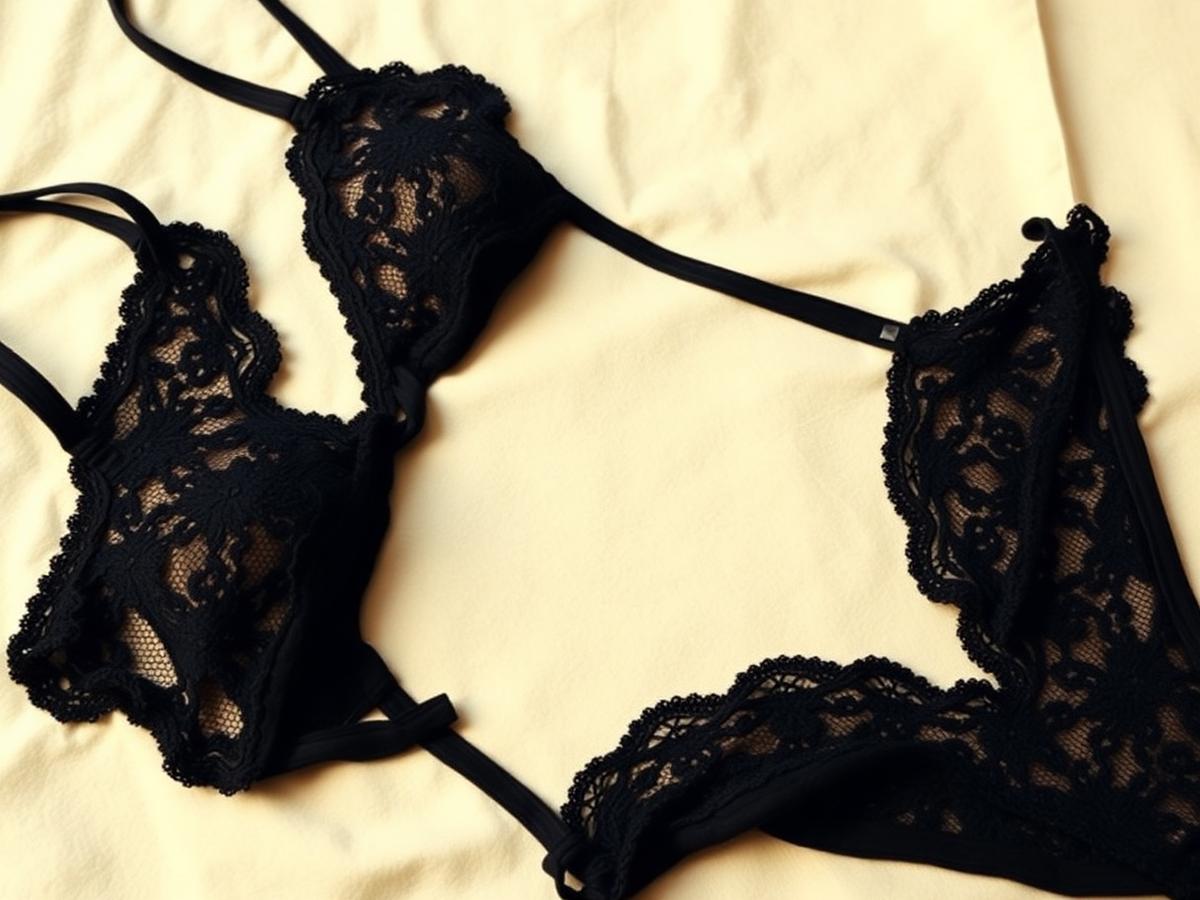
There's a black lace teddy sitting in our office right now, folded over the back of a chair because we haven't gotten around to photographing it. It cost $34, it's mostly see-through, and it has exactly one hook-and-eye closure holding the whole thing together at the crotch. That closure, more than anything else, is what makes it a teddy and not a bodysuit or a chemise or whatever else the product listing called it. (For the head-to-head, jump to teddy vs bodysuit.)
A teddy is a one-piece garment that runs from shoulder to hip in a single continuous line, pairing the top of a camisole or bralette with the bottom of a brief. Usually lace, mesh, or silk. The name is older than most people assume: "teddy" turns up in American catalogs from the 1910s, sold as a lightweight step-in meant to replace the corset-and-chemise combination Edwardian women had been stuck wearing for a decade too long. It went through satin in the '30s, underwire structure in the '80s, and now sits mostly in ultra-minimal French mesh.
The word gets misused constantly
Teddy, bodysuit, chemise, one-piece, playsuit: shoppers use these interchangeably, and honestly the categories do overlap. But the differences are checkable if you know where to look.
- Teddy
- One piece, brief-cut bottom, lace/mesh/satin, built as intimatewear first
- Bodysuit
- One piece, brief-cut bottom, heavier fabrics (jersey, ponte), meant to sit under jeans
- Chemise
- Short slip dress, loose through the body, no crotch closure at all
- One-piece / playsuit
- Catch-all term, usually shorts-length rather than a true brief cut
The test we actually use in the office: if it fastens at the crotch with hooks and it's lace or mesh, it's a teddy. Everything else is a naming argument.
Four styles, and who each one is for
The lace teddy is the classic, all-over stretch lace or a lace overlay on a mesh base. Some are lined at the bust, most aren't; we ordered four unlined pieces this cycle and sent two back for gaping. This is the version you'll see most across brands, from Adore Me to Journelle to Agent Provocateur, and it's the bulk of our best lace teddies of 2026 list, or the cheaper teddies under $30 edit if budget matters more than fabric weight.
Satin and silk teddies run cooler on the skin and read closer to sleepwear than to lingerie proper. Real silk charmeuse drapes best if the budget allows it (it rarely does at under $80); polyester satin fakes the drape at a third of the price and nobody at a glance can tell the difference. Strappy or harness teddies are what most people picture when they say "modern" teddy, all elastic straps and open-back cutouts, the Bluebella and Honey Birdette end of the spectrum, plus the heavier Savage X Fenty pieces. Structured teddies bring underwire and molded cups, sometimes boning through the torso, and they're the closest thing to a real bra in this category. If you need support above a B-cup, start there and skip the unlined lace entirely.
Fit is where most people get it wrong
A teddy that fits sits flat at the shoulder (no strap digging), smooth across the bust with no gap or spill, and meets cleanly at the hip crease. The crotch closure should fasten without stretching the fabric taut. If it's straining, size up, full stop.
Sizing runs small almost everywhere. We size up on principle now if the piece is unlined, because lace stretches less than the size chart implies. If you're bust-heavy, look for cup-sized teddies (32C–38DD ranges) instead of S/M/L; the S/M/L versions are built for an average that doesn't include most of our readers. Full breakdown in the teddy lingerie sizing guide.
Sexier than a matching set? Wrong question
A bra-and-panty set gives you two visible garments and a strip of bare waist. A teddy gives one continuous silhouette with cutouts wherever the designer chose to place them, often the back, the sides, or just under the bust. It photographs well for exactly that reason. It's also, practically, less fussy: no bra shifting, no waistband riding up. Brides gravitate toward teddies for the wedding night for both of these reasons; see the best bridal teddies for the wedding night if that's the occasion.
Where to start
If you've only ever bought matching sets, a teddy is the single most useful addition to a lingerie drawer we can recommend. It works for the bedroom, for bridal, for layering under a slip dress. A good one, properly fitted, lasts years, not months. Start with an unlined lace piece in a neutral (ivory, black, or a deep red) before you chase anything with boning or harness straps. Skip the ultra-cheap ($12 and under) polyester lace pieces entirely; the elastic recovery on those gives out after three or four washes and they end up in a drawer you avoid.
Keep exploring
Teddy vs bodysuit: what's the difference
Same silhouette, different jobs. When to pick which.
How a teddy should actually fit
Measurements, S/M/L to bra-size mapping, and the five fit checks before you cut the tags off.
Shop the best lace teddies
12 editor-tested lace teddies from $28 to $280.
Affordable teddies worth buying
Amazon picks that punch well above their price.
Get our best guides in your inbox.
One thoughtful email per week. New reviews, honest picks, and fit tips — no spam, ever.
Some links in this article are affiliate links. If you buy through them, we may earn a small commission at no extra cost to you. Read our full affiliate disclosure.